Why Taimet
The first AI tool purpose-built for merger antitrust risk - engineered by a senior enforcer to deliver real-world insight in minutes, not days.
Generic AI is fast and confidently wrong. Traditional research is rigorous and slow. Taimet is the best of both: a proprietary multi-agent system, calibrated to two decades of enforcement experience, that produces analysis you can actually act on.
A category of one.
There are AI products for legal research. There are platforms for deal data. There are economic-analysis tools and regulatory-tracking services. There is no other AI product purpose-built for merger antitrust risk. Taimet is the first - and the only - instrument designed end-to-end for this specific, high-stakes problem.
Generic tools aren't built for it. Taimet is.
That matters because merger antitrust analysis is not a general task an AI can pick up. It demands deep enforcement knowledge, sector-spanning research, real-world political awareness, and an understanding of how regulators, courts, and counterparties actually behave. Generic tools weren't built for it. We were.
Built by an enforcer who spent twenty years inside the work
Taimet's Founder, Gwendolyn Lindsay Cooley, served nearly two decades as Wisconsin's Assistant Attorney General for Antitrust. She chaired the National Association of Attorneys General Multistate Antitrust Task Force, leading coalitions of state and federal enforcers and collaborating with international counterparts. She co-led the trial team for the States' challenge to T-Mobile/Sprint - one of the highest-profile telecom antitrust cases in recent history.
Most AI products are built by AI researchers who consult lawyers. Taimet was built by a lawyer who spent two decades doing this work, in partnership with an engineer with two decades building production software. The reasoning encoded into the system isn't theoretical. It's hers.
Read more about Gwendolyn's background →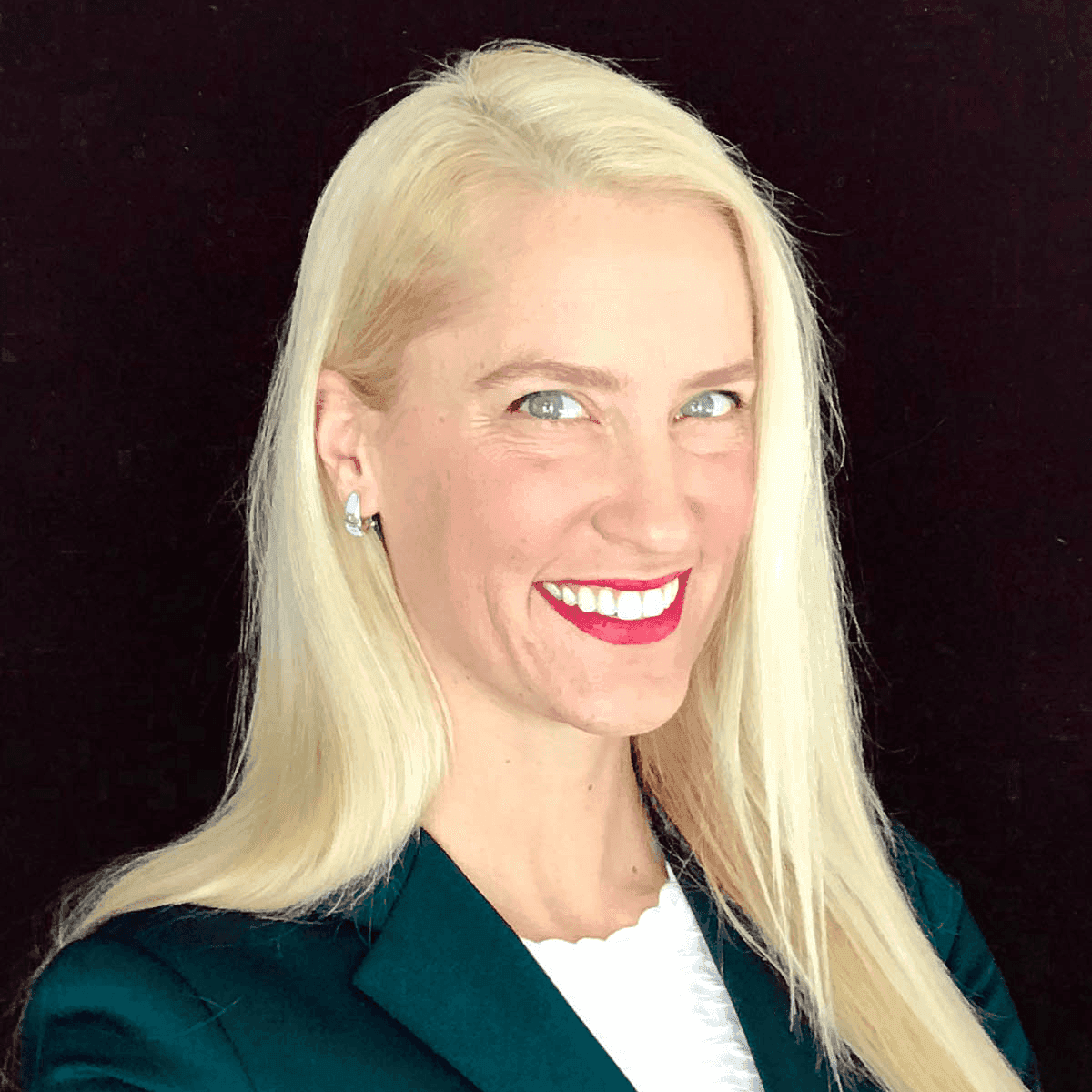
Things only an enforcer would know
There is a small body of working knowledge - the kind held by people who have spent years doing this - that determines how mergers actually get analyzed. None of it is in a textbook. Almost none of it is in an LLM's training data. All of it is in Taimet.
Pharmaceutical market definition
Small-molecule drugs are in the same market only if they share an identical molecular structure and are AB-rated for each other. Biologics are in the same market only if they’re biosimilars and treat the same disease. The distinction determines whether a pharma deal looks like a horizontal overlap or a non-issue. Most analysts don’t know it. Taimet does - and applies it automatically.
State enforcement patterns
Different state attorneys general challenge different kinds of mergers. Some are aggressive on hospital consolidation. Others on agriculture. Others on tech. Taimet knows which jurisdictions are likely to act on which transactions, which state-level enforcement theories apply, and which mergers will draw multistate coalitions.
Where the evidence actually lives
Pricing-power evidence often surfaces in investor presentations. Foreclosure intent shows up in board materials. Public statements about competitive intent surface in regulatory filings before they show up in press releases. Taimet knows where to look - because the person who designed it spent two decades looking there.
These are three examples among dozens. The full set is what makes the difference between an analysis that sounds expert and one that actually is.
Most antitrust analysis - economic, academic, or AI-generated - operates in a "but-for world": a hypothetical perfect-competition baseline against which the merger is measured. That framing has its uses. But it's not how mergers actually get cleared, challenged, or settled.
Taimet analyzes mergers in the real world. The current administration's enforcement priorities. The political posture of the relevant state attorneys general. Union activity in the affected industries. Recent precedent and how it's been applied. The parties' own prior conduct. Public statements that may surface in litigation.
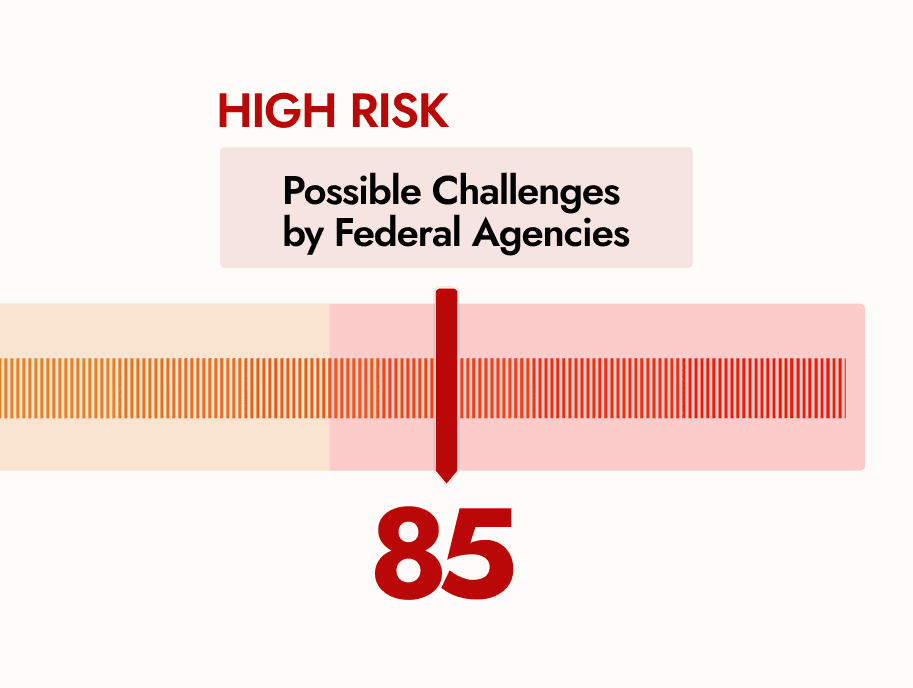
The output is not a theoretical assessment of competitive harm. It is a working prediction of how this transaction, in this political moment, with these parties, in these markets, will be received by the people whose job it is to review it.
The world mergers are actually reviewed in.
Every industry.
Every transaction type.
Every time.
Even the FTC and DOJ structure their staff around industry specialists - separate teams for healthcare, technology, energy, agriculture. Law firms specialize too. Hedge funds and consultancies build sector-specific desks. Specialization is the cost of doing this work seriously.
Taimet doesn't have to specialize. The system identifies the transaction type automatically, applies the right frameworks for the industry, and analyzes deals as effectively in mining or pharmaceuticals as it does in semiconductors or supermarket consolidation. A complex merger with horizontal and vertical components, hyper-local geographic markets, and significant political exposure gets the same depth of treatment as a clean single-product overlap.
Built with public data, by design.
Every Taimet analysis is built exclusively from public sources - SEC filings, court records, regulatory disclosures, reputable news, trade publications, investor presentations. We don't accept party-supplied documents. We don't process confidential deal materials. This is a foundational design decision:
For investors
The analysis carries no insider-trading risk because the underlying data is public. Trade with confidence that your information edge is legal.
For enforcers
There's no protective order to negotiate, no confidentiality clearance to wait for. The analysis arrives in 30 minutes, not 30 days.
For everyone
Sources are cited throughout. Every source is checkable. The reasoning is auditable end to end.
Generic AI is confidently wrong
Ask ChatGPT or Claude which merger guidelines apply to a transaction, and it will frequently cite the previous version - not the 2023 guidelines that the FTC actually adopted. Ask it which states have a healthcare premerger notification statute, and it will produce a confident, inaccurate list. Ask it whether a particular state has a parens patriae claim, and it will fabricate a citation to a section of code that says no such thing.
Taimet is engineered to make this class of error structurally rare. Verification passes check citations against source text. Reasoning-consistency checks compare conclusions across agents. The prompting layer encodes domain knowledge a generic model has no way to access. The architecture is built around the assumption that a single confident hallucination can poison an entire analysis - and prevents it from getting that far.
How Taimet compares
Against the practical alternatives - manual review from a paid consultant or queries to a general purpose chatbot - Taimet is not a marginal improvement. It's a different thing entirely.
Consultants
ChatGPT / Claude
Taimet
What customers actually do with it
Investors
Start with Taimet's identification of relevant markets and overlaps - often surfacing markets they hadn't considered. When Taimet's score diverges from market consensus, investors use the gap as a signal to dig deeper.
Enforcers
Use Taimet to triage filings, focus their investigations on the right markets, and free scarce agency resources from non-problematic transactions.
Law firms
Use it to compress days of associate research into minutes, structure deals consistent with enforcement expectations, and give clients a defensible early read on regulatory exposure.
General counsel
Screen potential acquisition targets before committing diligence resources to deals with hidden antitrust risk.
What practitioners are saying
“When you are reviewing multiple transactions with a small team, the constraint isn't judgment, it's time. A tool like this does not replace discretion, but it immediately shows you where to focus it.”
“Reflecting the creator's experience of regulatory matters, the depth of analysis, and more importantly the consistency, is far beyond anything we've seen from general tools. It's genuinely useful for investment decisions.”
“Even as antitrust enforcement becomes less predictable, the need for a clear, consistent view of risk hasn't gone away - if anything, it's more important. Taimet is one of the few tools that brings real structure to that uncertainty. We've been early believers, and it's become a critical part of how we advise investors in live situations.”
“Taimet is the first tool I've seen that genuinely closes the gap between legal analysis and investor needs. It delivers clarity where there used to be noise, and it's quickly become indispensable to how we advise our clients.”
Modernizing antitrust analysis
Antitrust is one of the oldest and most consequential bodies of regulatory law, and the way we analyze mergers under it has changed remarkably little in decades. The work is still slow, still inconsistent, still gated by who has access to which specialist on which day.
Taimet exists to change that - to make rigorous antitrust analysis faster, fairer, and more consistent for every practitioner who needs it, from the largest agency to the smallest fund. We're building the analytical infrastructure the field has been missing.
Put it to work
The depth regulators expect - without the multi-day grind.